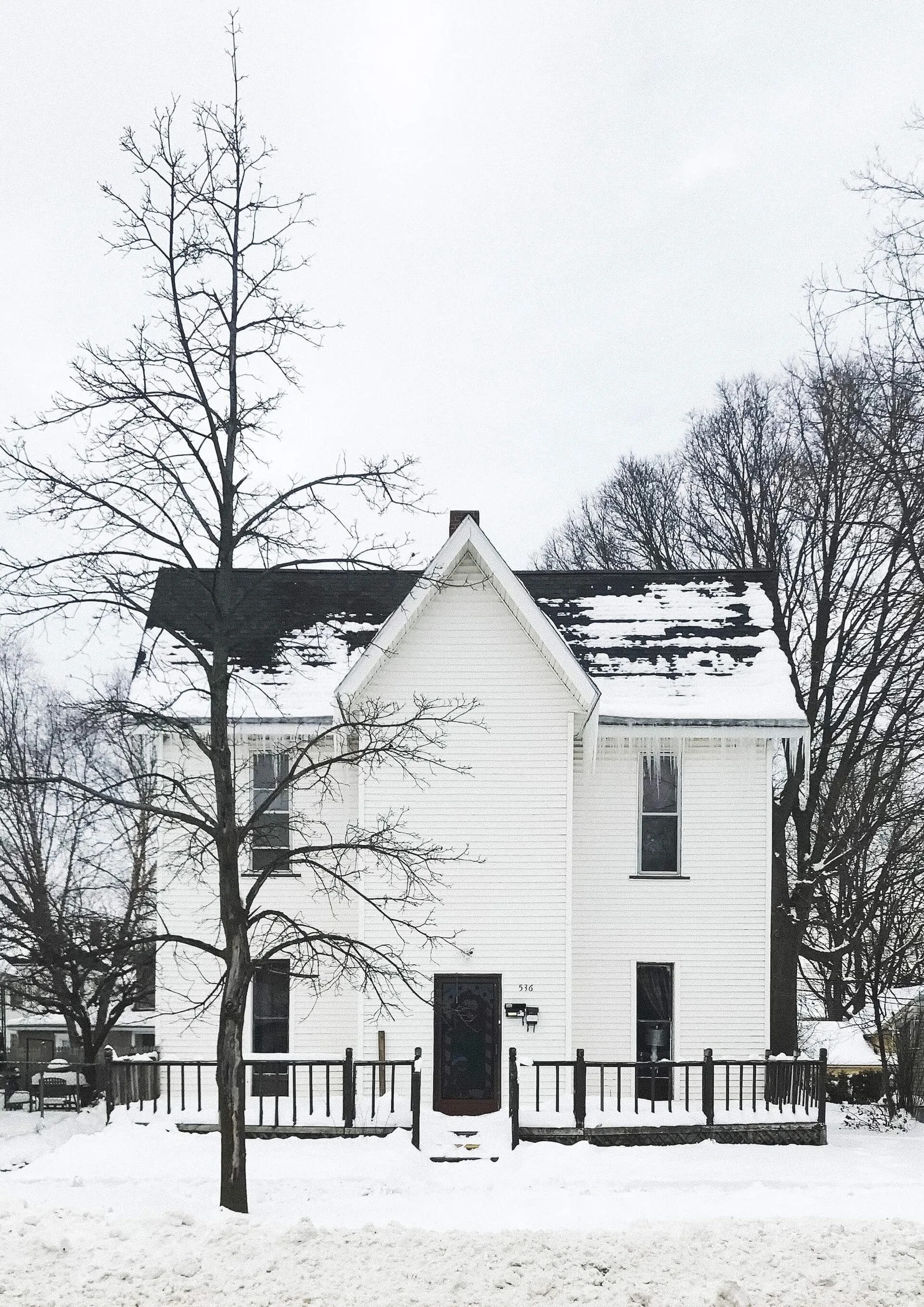
Roof snow concerns depend on the building, the load, and its condition. Snow depth alone cannot tell you whether a roof is safe. Do not assume a roof can carry an unusual accumulation simply because it was built to code.
Watch for a change in the building
If you notice sudden sagging, unusual cracking sounds, or other signs of possible structural distress, leave the affected area and seek urgent professional help. Do not climb onto the roof or enter an attic to investigate a suspected collapse risk.
Plan removal around safety
Have a qualified professional assess whether removal is needed and how it can be performed. Avoid climbing an icy roof, working below falling snow or icicles, or using tools near overhead electrical lines. Do not chip or chop at roofing to break away ice.
Understand ice dams
An ice dam can prevent meltwater from draining at the roof edge. Long-term correction may involve heat loss and air leakage as well as the roof itself. University of Minnesota Extension’s ice dam guidance explains the causes and notes that snow-removal tools can damage roofing.
Document recurring trouble
Keep photos taken from a safe location and note where water appears indoors. Ask the inspector to distinguish immediate leak protection from longer-term corrective work. For roof-related concerns, discuss a leak inspection; confirm availability and the appropriate specialist for snow removal or structural work.