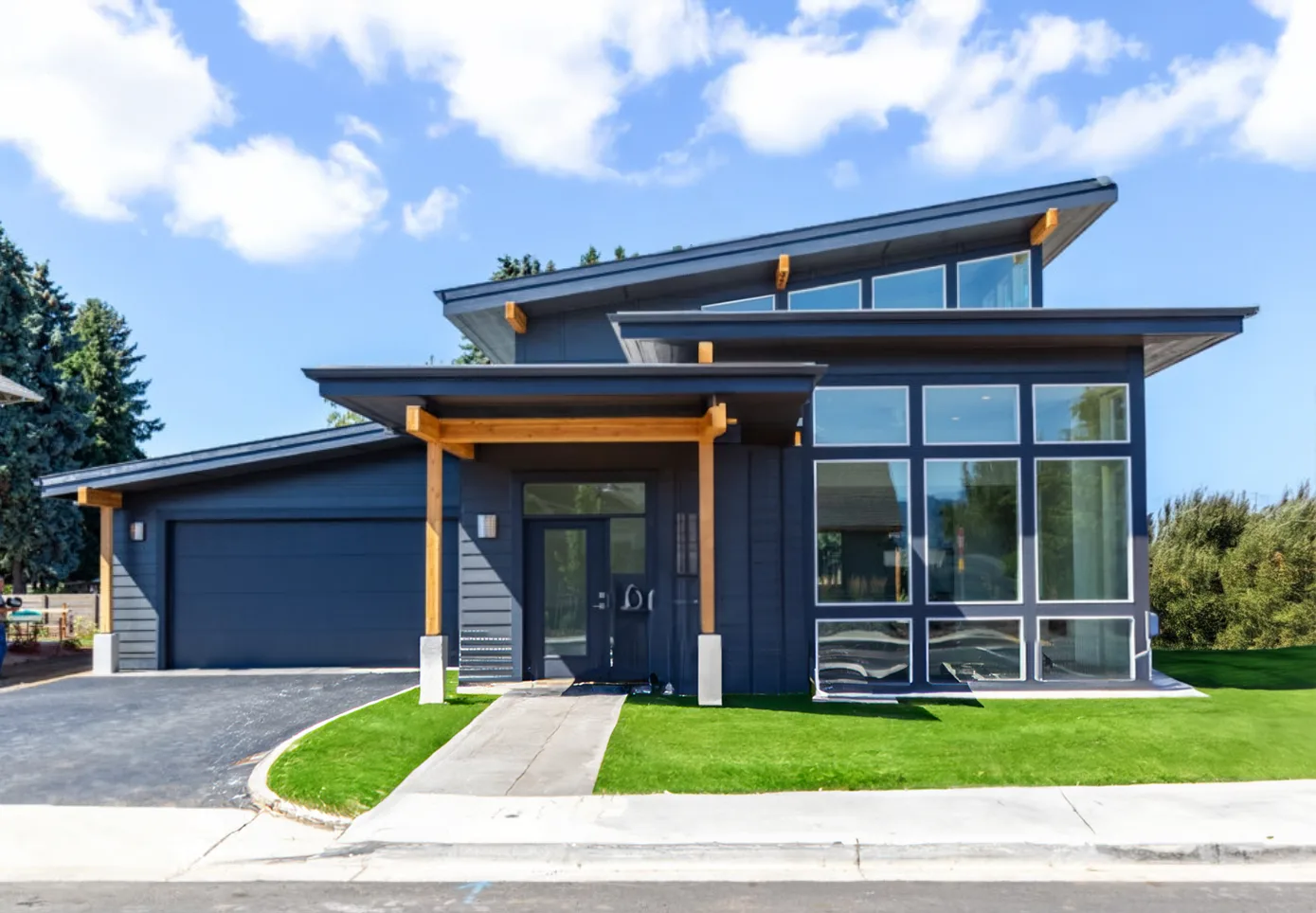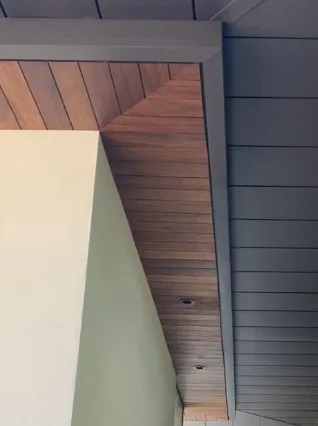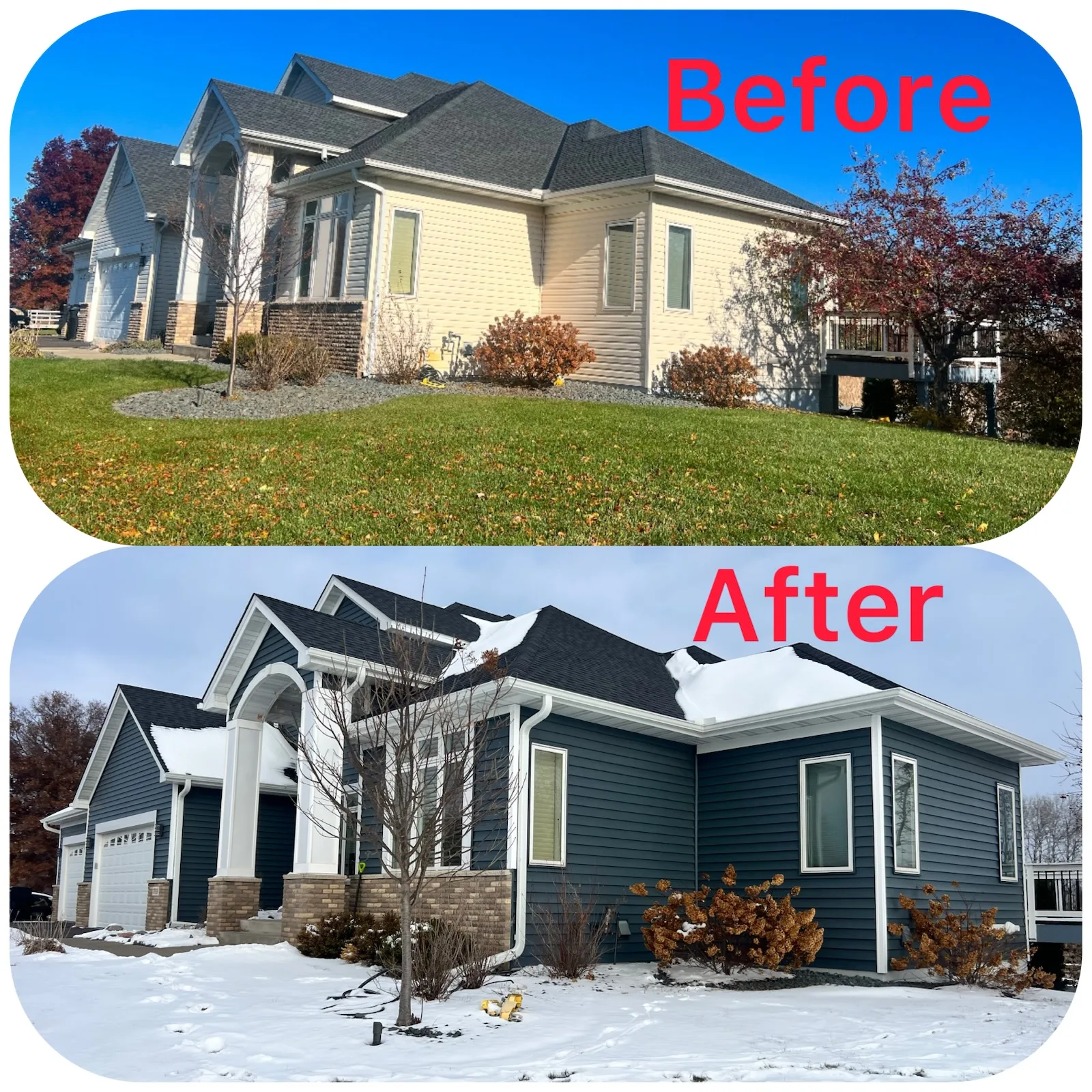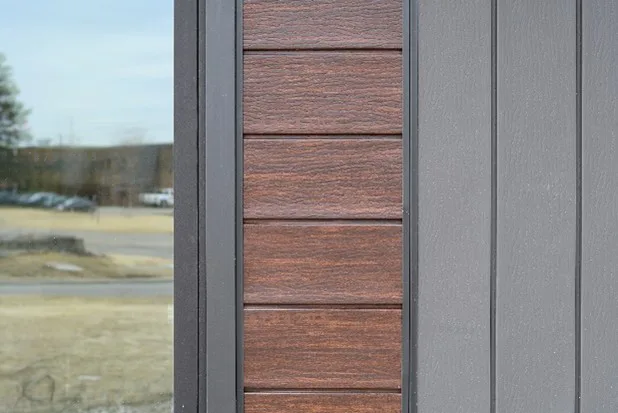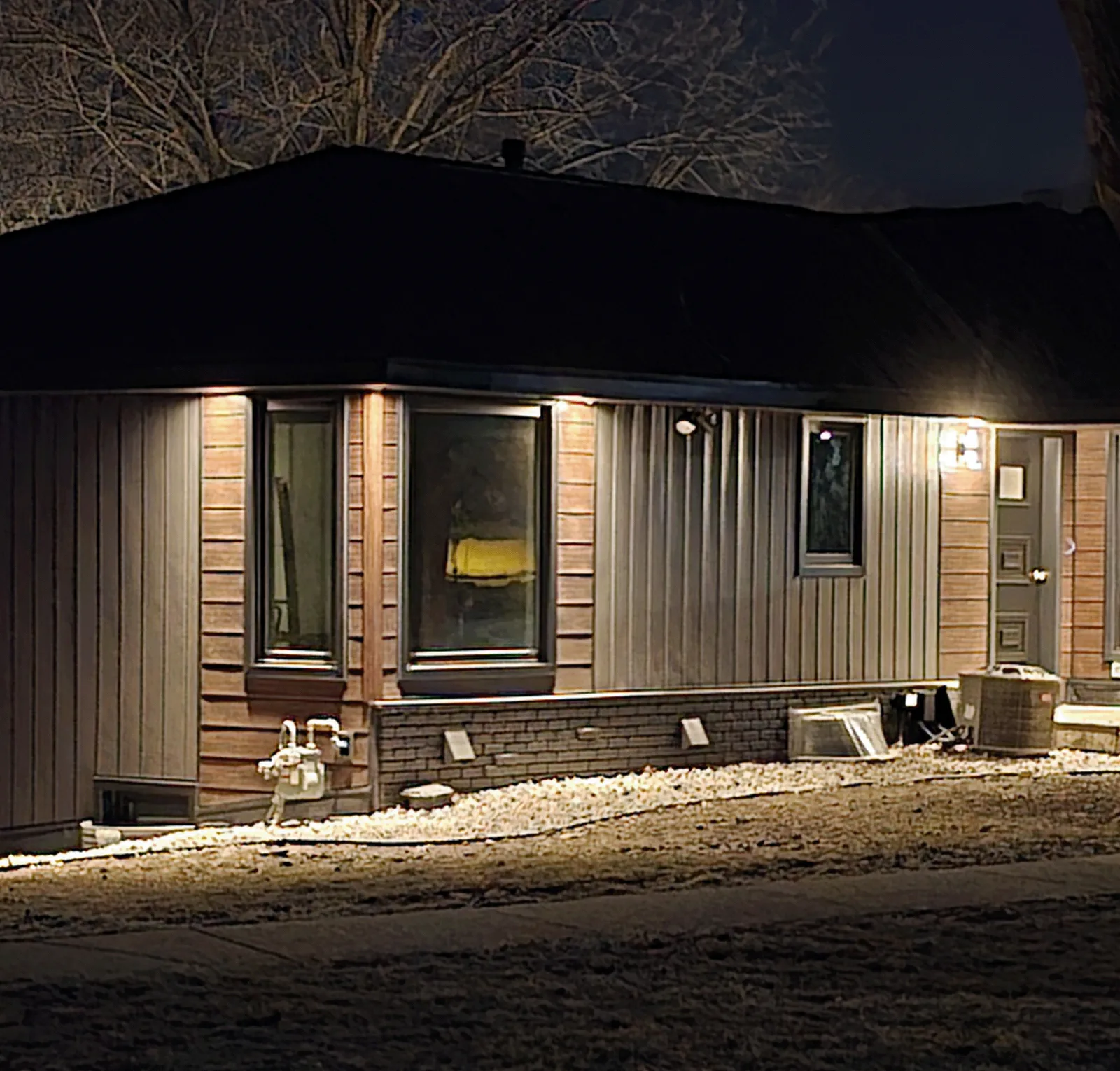
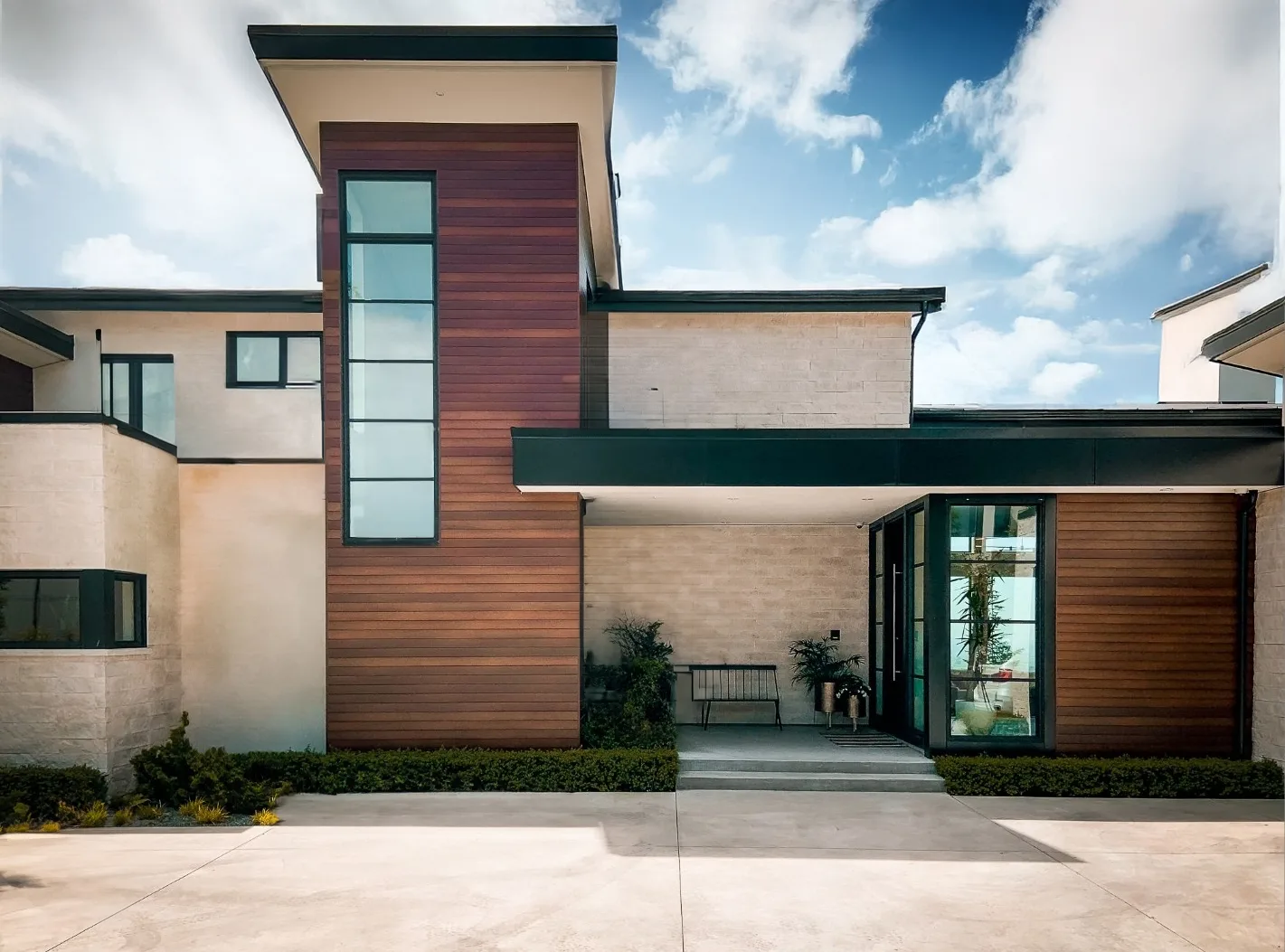
Contrasting siding, trim, and roof colors can draw attention to a home’s shape. A dark panel beside a lighter accent or a change from horizontal to vertical siding can create definition. Start with the architecture and the elements you plan to keep.
Build a coordinated palette
Review physical samples alongside existing brick, stone, roofing, and window finishes. Look at them outside in different light. Use a small number of deliberate material changes, and decide how corners, openings, and transitions will be finished.
Compare the exact products
Steel, fiber cement, engineered wood, and vinyl products differ in profile, installation details, care, and finish choices. Ask for the specific manufacturer and product line in your estimate. A wood-look finish does not identify the underlying material or establish its performance.
Ask for evidence behind environmental claims
If recycled content, manufacturing emissions, or end-of-life recycling matters to your decision, request current documentation for the exact product. Check the scope and assumptions of any environmental declaration. A claim about one material or manufacturing process cannot automatically be applied to every siding product.
Connect appearance to installation
Discuss flashing, the wall assembly, trim details, and written warranty terms along with color. Browse the material directory and project galleries for discussion ideas, then plan a siding replacement around your home’s actual conditions.
Article photos