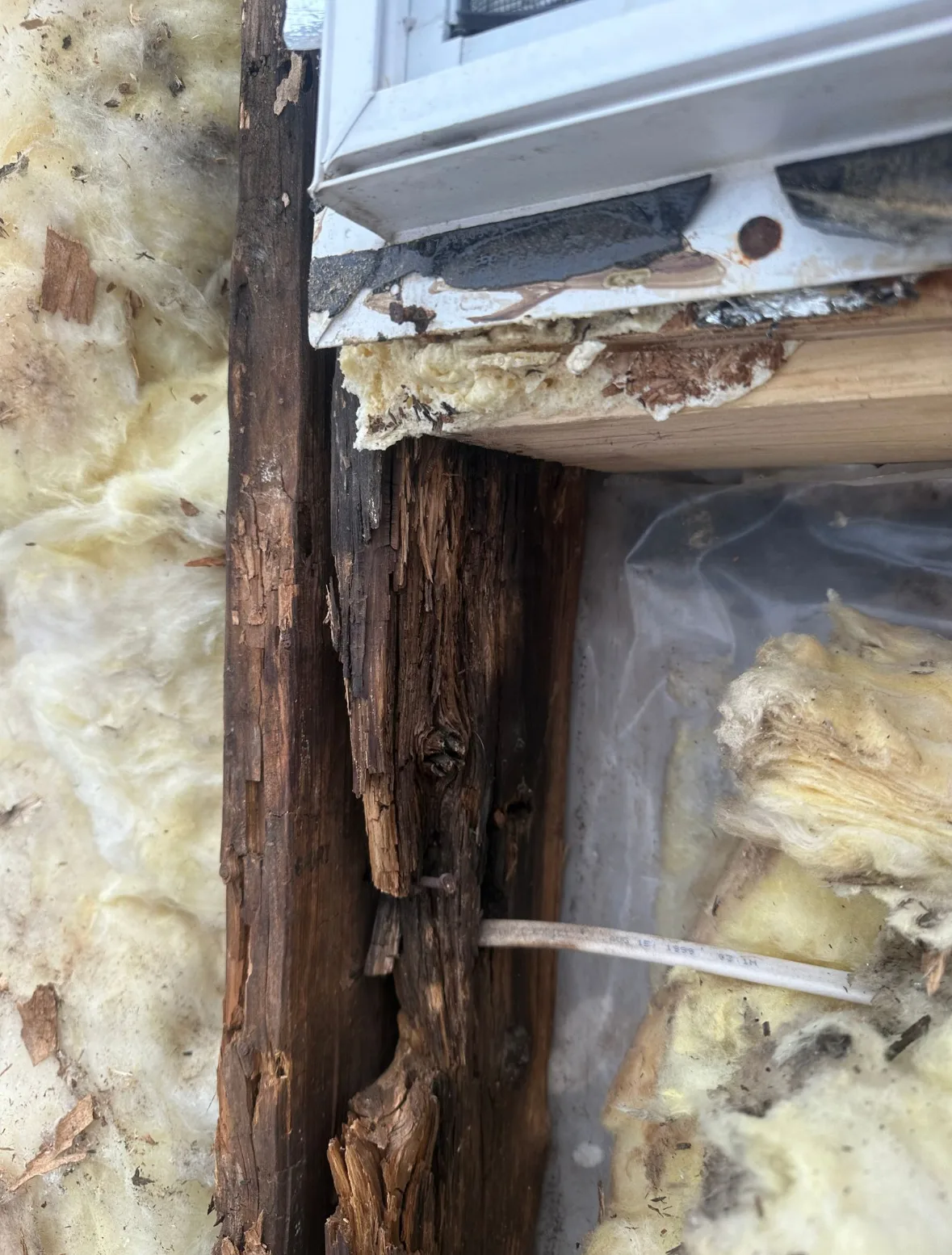
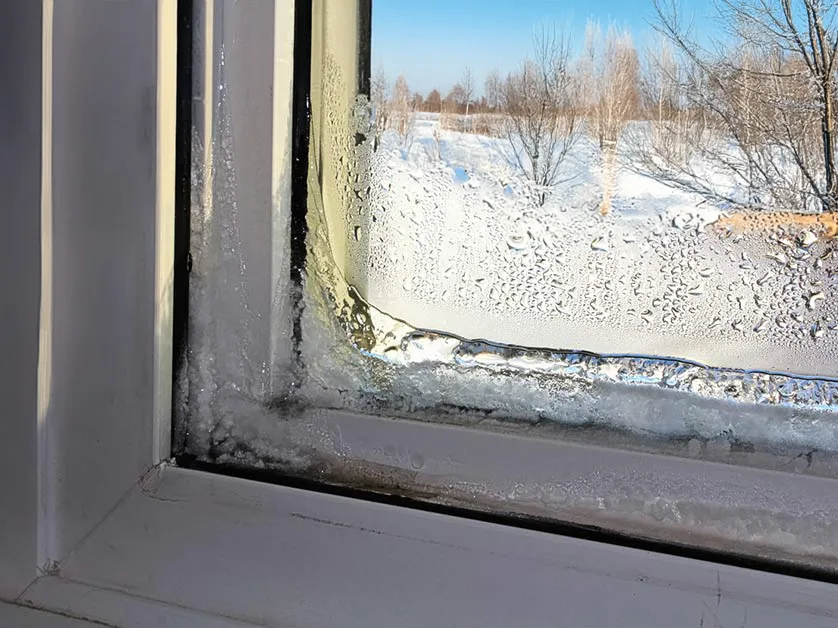
Ice on the inside of a window deserves attention, but it does not by itself prove that the frame or wall is rotten. Record where moisture appears and whether it occurs on the room-side glass, between panes, or around the frame. Those are different observations to discuss during an inspection.
Start with moisture and window performance
Indoor moisture can condense on cold glass. Window performance, air leakage, and indoor conditions all matter. The Department of Energy’s window guide explains glazing, spacers, and air leakage. An inspection should distinguish these issues from water entering around the exterior.
Document the surrounding area
Photograph recurring moisture, peeling finishes, staining, or damaged trim. Note whether the problem follows cold weather, rain, or both. Avoid covering recurring damage with new paint before its source has been investigated.
Choose the repair after the inspection
Ask what was found and which repair addresses it. A recommendation for new windows should explain why the existing assembly cannot be repaired adequately and what work is included around the opening. Explore window replacement or request an inspection.
Article photos